Buttery Almond Filled Croissants
Highlighted under: Sweet Sensations
I absolutely adore making Buttery Almond Filled Croissants at home! The aroma that fills my kitchen while they bake is simply irresistible, and I find joy in each step of the process. The combination of flaky pastry and rich almond filling creates a delightful experience that's hard to resist. These croissants make for the perfect breakfast treat or a lovely afternoon indulgence with coffee. Plus, once you get the hang of it, making these can become a therapeutic routine in your kitchen!
When I first attempted these almond-filled croissants, I was amazed at how the layers of buttery pastry come together. I found that using cold butter is crucial for achieving that perfect flaky texture. Each time I make them, I experiment with the almond filling, sometimes adding a splash of vanilla or a hint of almond extract. It not only enhances the flavor but also makes each bite even more indulgent.
What surprised me was how easy it was to shape the croissants once the dough is rolled out. I initially thought it would be a complex task, but with practice, I quickly learned the right technique. I recommend brushing them with egg wash before baking to achieve a beautiful golden finish. The result is a pastry that is not just delicious but stunning to behold!
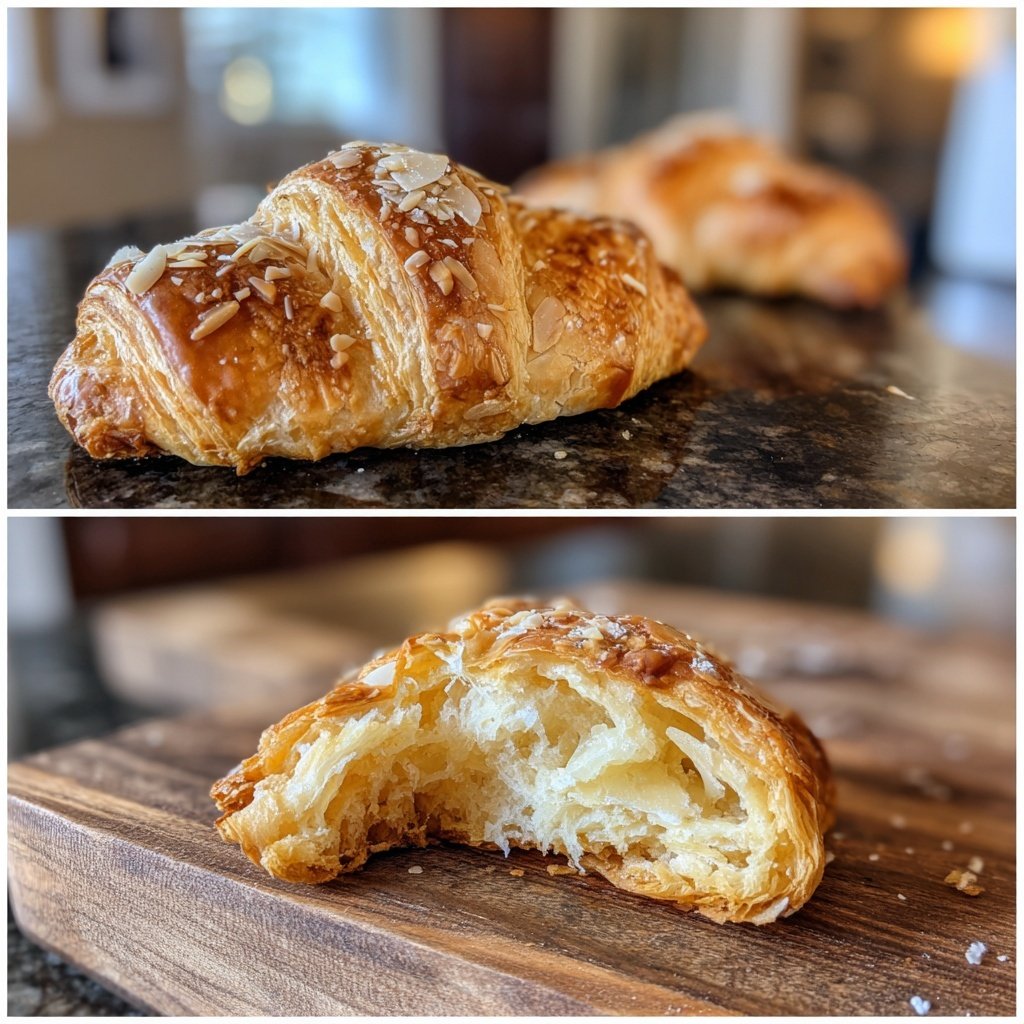
Why You'll Love These Croissants
- Rich almond flavor that perfectly complements buttery pastry
- Flaky texture that contrasts beautifully with the creamy filling
- A delightful addition to any brunch or special occasion
Mastering the Croissant Dough
Creating the perfect croissant dough is essential for achieving that flaky texture that everyone loves. When mixing the ingredients, make sure to use cold milk, as warm milk could inhibit the yeast's activation and affect the dough's rise. Kneading the dough until it's smooth is key—this not only develops gluten but helps to create layers. If you're facing trouble with kneading, don’t shy away from dusting with a little more flour to ensure it doesn't stick, but be cautious not to add too much to avoid a dense dough.
After allowing the dough to rest, you'll need to laminate it by incorporating cold butter. Ensuring your butter is at the right temperature is crucial; it should be cold but pliable enough to roll out without cracking. If your butter becomes too soft during handling, place everything back in the fridge for 10-15 minutes to firm it up. This will help maintain distinct layers, which contribute to the desired flakiness. Visual cues during this process are critically important—look for a dough that is smooth and elastic, with well-defined layers appearing during rolling.
Crafting a Luxurious Almond Filling
The almond filling is where you can really shine with flavor. Make sure to use fresh almond meal for the best taste—if yours has been sitting for a while, consider giving it a quick toast in a dry pan over low heat to invigorate the nutty flavor. When combining the ingredients, thoroughly mix until smooth; any lumps in the filling can lead to inconsistencies in the final croissant. Additionally, if you're sensitive to sweetness, you can adjust the amount of powdered sugar to taste, keeping in mind the richness of the melted butter.
If you prefer a different flavor profile, feel free to play with the almond extract. For instance, vanilla extract can be a wonderful substitute, lending a creamy sweetness that complements the croissants beautifully. You could also try incorporating a splash of orange blossom water or a hint of cinnamon for a warm, fragrant twist. Just remember, the key is to maintain the balance between the buttery croissant and the filling, so any additions should enhance rather than overpower the overall flavor.
Ingredients
- For the croissant dough
Croissant Dough
- 500g all-purpose flour
- 10g salt
- 50g sugar
- 20g active dry yeast
- 250ml cold milk
- 300g unsalted butter (for laminating)
- 2 large eggs (for egg wash)
Almond Filling
- 200g almond meal
- 100g powdered sugar
- 1 large egg
- 50g melted butter
- 1 tsp almond extract

Instructions
Prepare the Croissant Dough
In a bowl, mix all-purpose flour, salt, sugar, and yeast. Add cold milk, and knead until a smooth dough forms. Let rest covered for 30 minutes.
Incorporate the Butter
Roll the dough into a rectangle, place cold butter in the center, and fold the dough over it. Roll out again and fold into thirds. Repeat this process two more times.
Make the Almond Filling
In a bowl, combine almond meal, powdered sugar, egg, melted butter, and almond extract until smooth.
Shape the Croissants
Roll out the laminated dough into a large rectangle again. Cut into triangles, spoon the almond filling onto the base of each triangle, and roll them tightly from base to tip.
Final Proof and Bake
Place croissants on a baking sheet, cover, and let them rise for 30 minutes. Preheat the oven to 200°C (400°F), brush croissants with egg wash, and bake for 15-20 minutes until golden.
Pro Tips
- To ensure the butter remains cold while laminating, work in a cool environment and avoid overworking the dough.
Making Ahead and Storage
Buttery Almond Filled Croissants can be made ahead of time, which is a great option for busy mornings or special brunches. After shaping the croissants, instead of letting them rise, you can cover them with plastic wrap and place them in the fridge overnight. This slow proofing allows for a deeper flavor and texture. When ready to bake, take them out, let them come to room temperature for about 30 minutes, and then proceed with the egg wash and baking.
If you have leftovers, they can be stored in an airtight container at room temperature for up to two days. For longer storage, freeze the baked croissants by placing them in a single layer on a baking sheet, then transfer them to a freezer bag once frozen solid. To reheat, pop them in a preheated oven at 180°C (350°F) for about 10-15 minutes until warmed through and crispy again.
Troubleshooting Common Issues
If your croissants aren't rising properly, ensure that your yeast is fresh and has been activated correctly. A quick test is to mix the yeast with warm water and sugar—if it bubbles within a few minutes, it’s good to go. Also, room temperature plays a critical role during the final proof; if it's too cold, the croissants won’t puff up, so find a warm spot in your kitchen or use an oven with just the light on as a warm environment.
For those who find their croissants turning out greasy, it could be that your butter temperature was too high when laminating, or you might have overworked the dough. To avoid this, keep the surfaces lightly floured and ensure that the butter remains cool throughout the process. Remember that patience is key; not rushing through the folds or rolls will yield the best texture and structure. If you encounter any dense spots, gently stretch the dough during shaping for a more even bake.
Questions About Recipes
→ Can I make the dough in advance?
Yes, you can make the dough ahead of time and store it in the refrigerator overnight.
→ What can I substitute for almond extract?
You can substitute with vanilla extract for a different flavor profile.
→ How do I know when the croissants are done?
They should be golden brown and have a hollow sound when tapped on the bottom.
→ Can I freeze the baked croissants?
Absolutely! You can freeze them after baking; just reheat them in the oven before serving.
Buttery Almond Filled Croissants
Created by: Ivy Richardson
Recipe Type: Sweet Sensations
Skill Level: Intermediate
Final Quantity: 10 croissants
What You'll Need
Croissant Dough
- 500g all-purpose flour
- 10g salt
- 50g sugar
- 20g active dry yeast
- 250ml cold milk
- 300g unsalted butter (for laminating)
- 2 large eggs (for egg wash)
Almond Filling
- 200g almond meal
- 100g powdered sugar
- 1 large egg
- 50g melted butter
- 1 tsp almond extract
How-To Steps
In a bowl, mix all-purpose flour, salt, sugar, and yeast. Add cold milk, and knead until a smooth dough forms. Let rest covered for 30 minutes.
Roll the dough into a rectangle, place cold butter in the center, and fold the dough over it. Roll out again and fold into thirds. Repeat this process two more times.
In a bowl, combine almond meal, powdered sugar, egg, melted butter, and almond extract until smooth.
Roll out the laminated dough into a large rectangle again. Cut into triangles, spoon the almond filling onto the base of each triangle, and roll them tightly from base to tip.
Place croissants on a baking sheet, cover, and let them rise for 30 minutes. Preheat the oven to 200°C (400°F), brush croissants with egg wash, and bake for 15-20 minutes until golden.
Extra Tips
- To ensure the butter remains cold while laminating, work in a cool environment and avoid overworking the dough.
Nutritional Breakdown (Per Serving)
- Calories: 350 kcal
- Total Fat: 20g
- Saturated Fat: 12g
- Cholesterol: 95mg
- Sodium: 160mg
- Total Carbohydrates: 35g
- Dietary Fiber: 2g
- Sugars: 14g
- Protein: 8g